Cindy Mirande
The Art of Shifting Perspectives – Cindy Mirande
The Prismatic Gaze within Creative Research and Design Education:
A Discovery Compass
What if attention is the most radical gift we can offer?
In today’s fast-paced and distracted world, true attention has become rare. As an educator, I see how we often reward speed, certainty, and instant results, while creativity thrives in uncertainty. It breathes in the pause, in the space between things.
This thesis introduces the Prismatic Gaze: a way of seeing that invites curiosity, values complexity, and stays with the unclear. It’s a framework developed through arts-based research and my teaching practice, shaped not by delivering answers, but by learning to notice what usually remains overlooked.
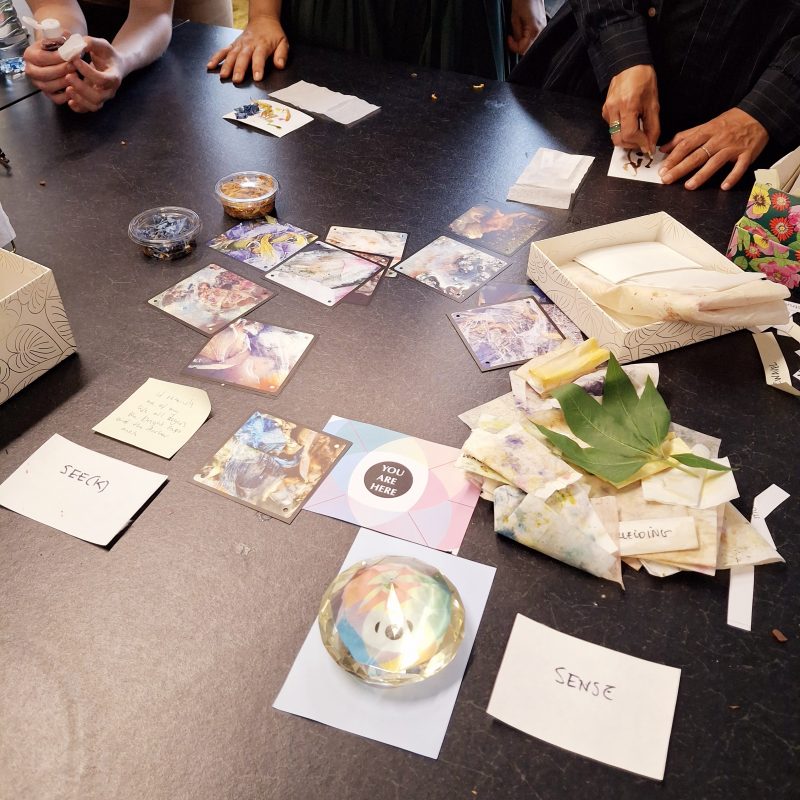
To support this, I created the Discovery Compass: a set of simple prompts and attentional practices designed to help learners pause, reflect, and explore differently. Like light passing through a prism, our attention can reveal hidden colors and meanings in what we observe.
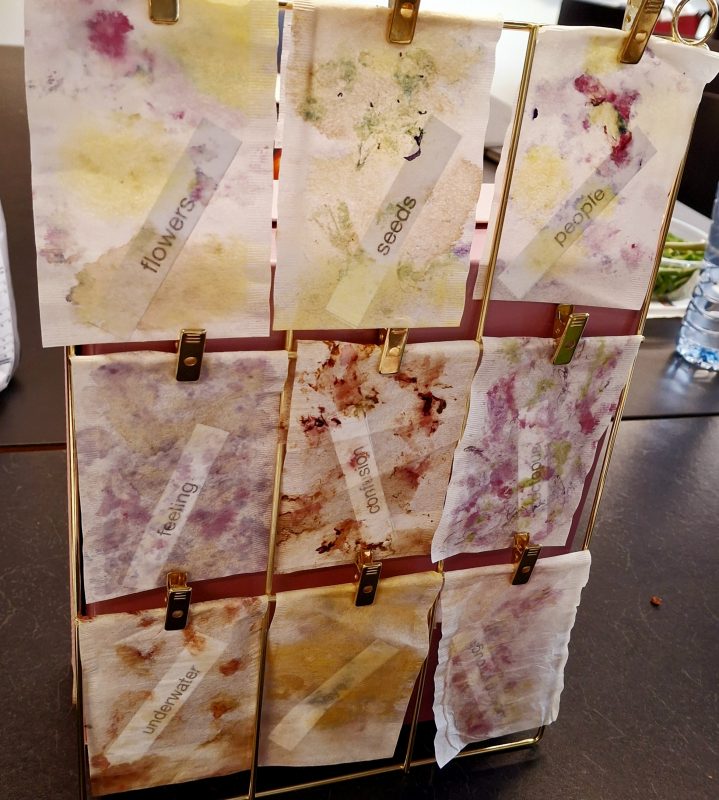
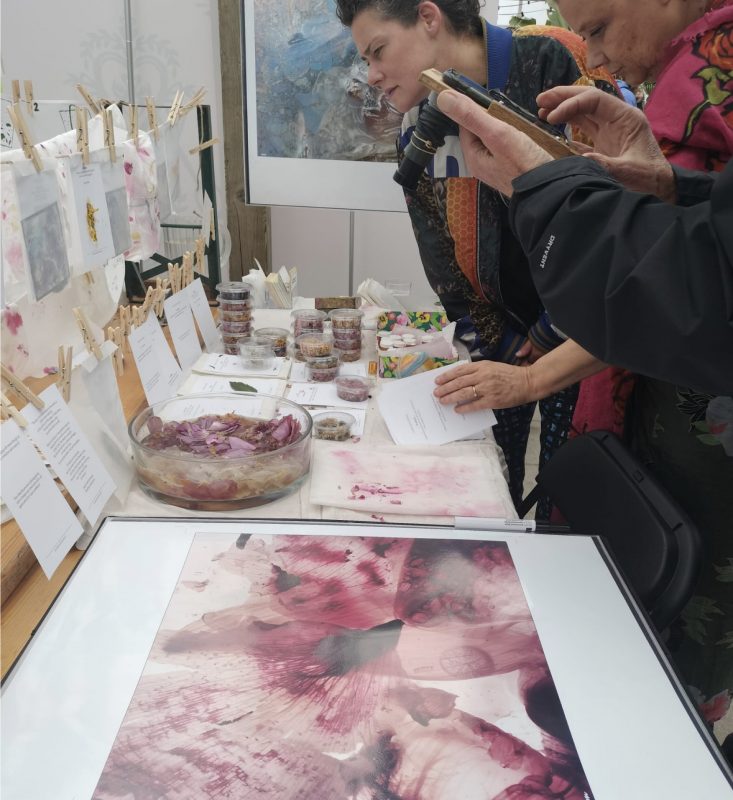
In my own art practice, I photograph decomposing flowers through a macro lens. These ‘search pictures’ resist quick interpretation. They ask: What am I really seeing? In that moment, seeing becomes sensing. Attention becomes inquiry.
This compass is more than a metaphor. It offers four practical modes of attention that can be applied in creative education, each linked to a lens that shifts how we engage with the world:
- SEE(K): invites us to question how we look.
- SENSE: asks us to engage our senses and emotions.
- SHARE: opens space for connection and dialogue.
- SHIFT: welcomes transformation through reflection.
These lenses were inspired by French theorist Yves Citton, who describes attention as an ecological condition, shaped not just by individual will, but also by emotions, relationships, and culture. His work helped me see that attention is not something we simply direct; it’s something we live inside. My framework translates his theory into practical tools for learning and discovery.
Art and nature play a key role here. They become counter-spaces, places where we can slow down, and pay closer attention. In these spaces, we don’t just look at the world; we begin to sense our place within it.
This is the art of shifting perspectives.
Let us become gardeners of attention, tending to what is quiet, small, and easily missed.
Because that’s where imagination takes root.
Thesis: